
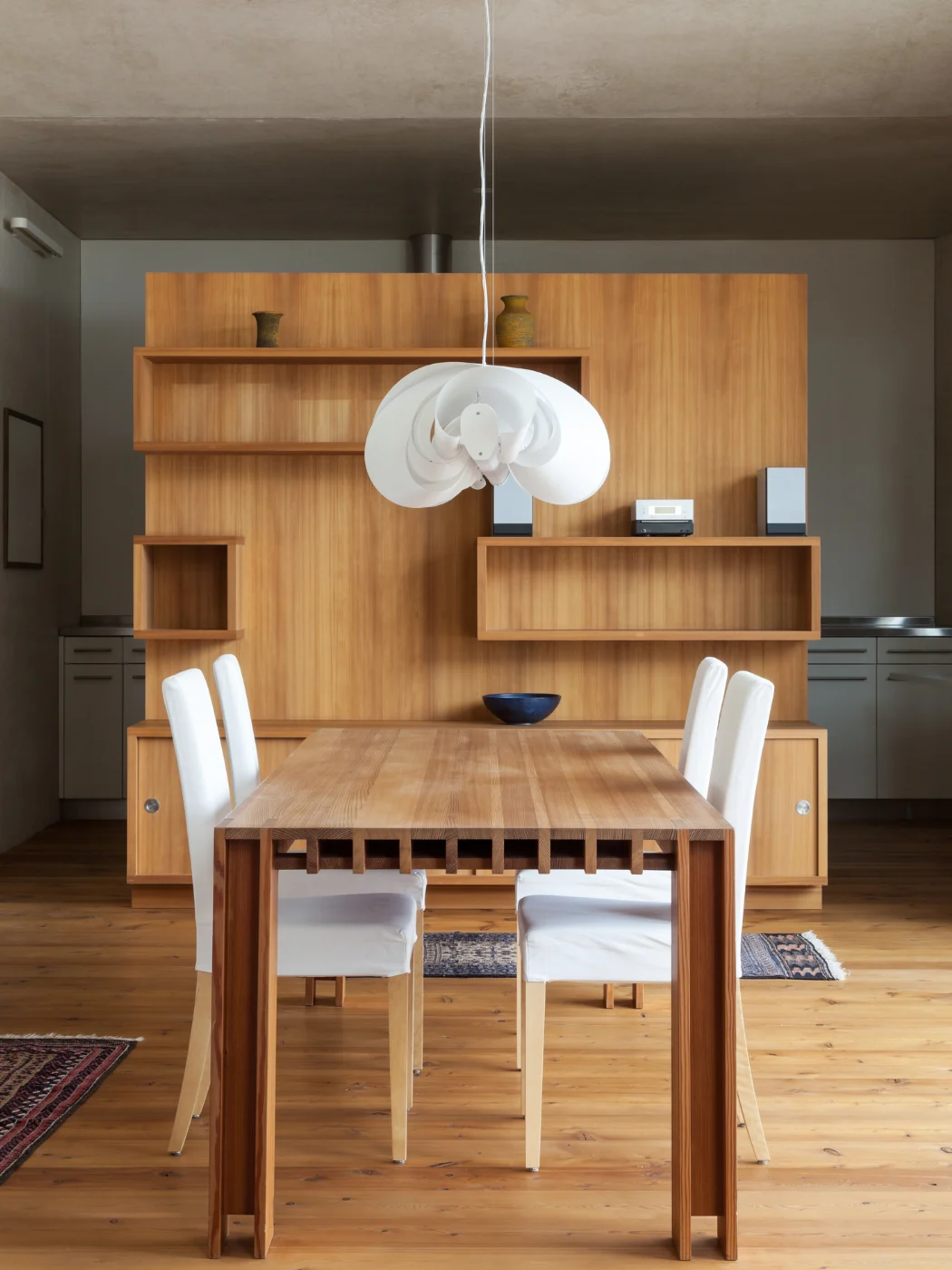
This guide answers one question at a time so they can confidently choose what size dining table works in an Australian home, whether it’s a Sydney apartment, a Brisbane Queenslander, or a Perth open-plan build.
What measurements should they take before buying a dining table?
They should measure the dining zone length and width, then map out walkways and chair space before looking at styles. This quickly reveals the true maximum footprint.
As a simple start, they can mark the table outline on the floor using painter’s tape. It helps them see what size dining table will feel comfortable day to day, not just on paper.
How much clearance do they need around the table in an Australian home?
Most homes feel workable with at least 90 cm of clearance from the table edge to the nearest wall or furniture. This allows people to slide chairs back and walk past without constant shuffling.
If the space is tight, they can sometimes drop to around 75 cm on one side that gets less traffic. That small change can decide what size dining table is realistic in compact Australian layouts.
How many people should the table seat comfortably?
A practical rule is around 60 cm of table edge per person for everyday meals. For a more generous feel, especially for adults, 65 to 70 cm per person is often better.
They should also think about who actually sits there. If it’s usually two adults and a child, a smaller option may suit, even if they like the idea of hosting. This keeps what size dining table aligned with real use.
What size dining table suits 2, 4, 6, or 8 people?
For guidance, many Australian households find these ranges helpful:
- 2 to 4 people: around 120 to 140 cm long rectangular, or 90 to 110 cm round
- 4 to 6 people: around 150 to 180 cm long rectangular, or 120 to 135 cm round
- 6 to 8 people: around 200 to 240 cm long rectangular, or 150 cm round (if the room allows)
They should treat these as starting points, then confirm clearances. The goal is what size dining table fits the room and still leaves breathing space.
Is a round, square, rectangular, or oval table best for their room shape?
Rectangular tables suit long rooms and open-plan zones common in newer Australian homes. They tend to maximise seating while keeping a clean footprint.
Round tables can be excellent for square rooms and smaller apartments because corners don’t block pathways. Oval tables often give a similar soft edge but seat a bit more, which can solve what size dining table problems in narrow spaces.
How does chair size affect the table size they can choose?
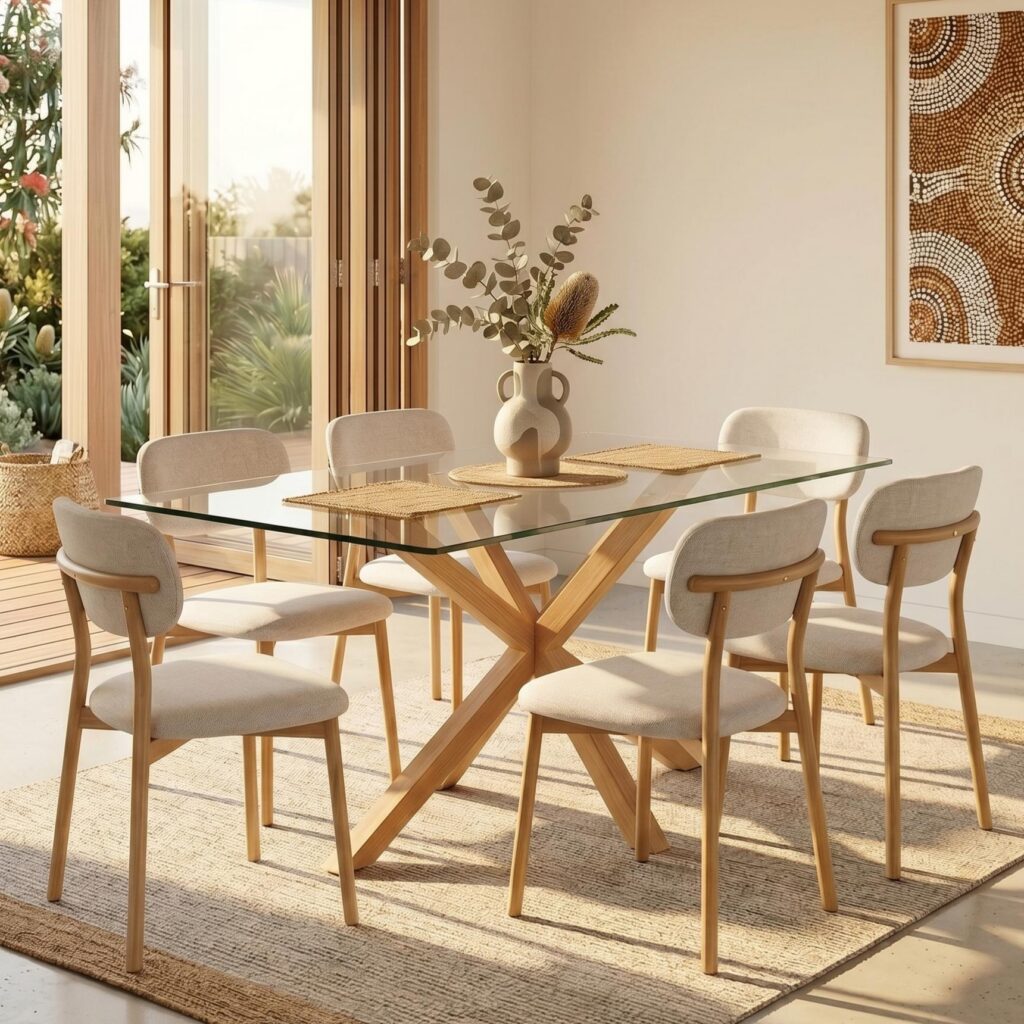
Dining chairs vary a lot, and bulky chairs can steal space fast. They should check chair width, chair depth, and whether arms will hit the tabletop edge.
If they plan upholstered armchairs, they may need a slightly wider table or fewer seats. In many cases, swapping to slimmer chairs lets them choose what size dining table they wanted without crowding the room.
How can they plan for entertaining without oversizing the table?
They can choose a table that suits everyday life, then add flexibility for guests. An extendable table is the simplest solution for many Australian families.
If they rarely host, they could use a compact table and keep stacking chairs in storage. This avoids buying what size dining table only makes sense a few times a year.
When does an extendable dining table make the most sense?
Extendable tables work well where the dining area doubles as a walkway, living zone, or kids’ homework spot. In many open-plan Australian homes, they keep the space adaptable.
They should measure the table at both sizes, including clearance with chairs pulled out. This ensures what size dining table still works when extended, not just when closed.
What table width and depth feels comfortable for place settings?
Many people find a table depth of about 90 to 100 cm comfortable for shared meals, serving dishes, and elbows. Narrower tables can work, but they may feel tight if they use large plates or serving boards.
For smaller homes, a slightly narrower table can be smart if it protects walkways. The best answer to what size dining table is often the one that keeps movement easy.
How can they fit a dining table into an open-plan living space?
They should define the dining zone first, not last. A rug, pendant light, or even the direction of the table can visually “anchor” the area.
They also need to keep major traffic lanes clear, such as paths to the kitchen, hallway, or sliding doors to the backyard. In open-plan homes, what size dining table is as much about flow as it is about seating.
What size dining table suits a small apartment or unit?
Smaller apartments in places like Melbourne, Sydney, or the Gold Coast often suit round tables or compact rectangles. These shapes reduce sharp corners in tight walkways.
They can also consider a wall-adjacent placement with bench seating on one side. This can make what size dining table feel larger in use without taking up extra floor space.
How do they choose the right table height for comfort?
Most dining tables sit around 72 to 76 cm high, which suits standard dining chairs. They should confirm the chair seat height and allow roughly 25 to 30 cm between seat and tabletop underside.
If they are mixing chairs or using a bench, they should test comfort first. Even the perfect what size dining table can disappoint if the height relationship feels awkward.
What common mistakes cause a dining table to feel too big or too small?
A common mistake is measuring the room but forgetting chair pull-back space. Another is choosing based on a showroom, where the surrounding space is far larger than a typical Australian home.
They can avoid regret by taping the footprint, then simulating people sitting and walking past. It’s the quickest reality check on what size dining table they should bring home.
How can they quickly sanity-check the table size before purchasing?
They can do three fast checks: taped outline on the floor, chair depth added behind each side, and a clear walking line to key areas like the kitchen. If any path feels pinched, the table is likely too large.
They should also check delivery access, especially in apartments with lifts or tight stairwells. Practical details can change what size dining table is actually viable.
What’s a simple rule-of-thumb they can follow to decide?
They should pick the smallest table that comfortably fits their everyday household, then add flexibility if they entertain. This usually creates a practical balance of comfort, space, and long-term usability. When choosing a dining table and chair set that lasts, they should also consider the frame construction, surface durability, chair strength, and how easily the pieces can be maintained over time.
When in doubt, prioritising walkways and chair movement will usually lead them to what size dining table truly suits their living space, not just their wishlist.
FAQs (Frequently Asked Questions)
What measurements should I take before buying a dining table for my Australian home?
Measure the dining zone’s length and width, then map out walkways and chair space to reveal the true maximum footprint. Marking the table outline on the floor with painter’s tape helps visualize what size dining table will feel comfortable day to day, not just on paper.
How much clearance is recommended around a dining table in an Australian home?
Most homes work well with at least 90 cm of clearance from the table edge to the nearest wall or furniture, allowing easy chair movement and walking space. In tighter areas, clearance can sometimes be reduced to around 75 cm on less trafficked sides to fit a realistic dining table size.
What size dining table suits different numbers of people in Australian homes?
For 2 to 4 people, a rectangular table around 120-140 cm long or round 90-110 cm works well. For 4 to 6 people, consider 150-180 cm long rectangular or 120-135 cm round tables. For 6 to 8 people, tables around 200-240 cm rectangular or 150 cm round (if space allows) are suitable. Always confirm clearances to ensure comfort.
Which table shape is best for various room layouts in Australian homes?
Rectangular tables suit long rooms and open-plan zones common in newer homes, maximizing seating with a clean footprint. Round tables are great for square rooms and smaller apartments as corners don’t block pathways. Oval tables offer soft edges and can seat more in narrow spaces, helping solve size challenges.
How does chair size impact the choice of dining table size?
Bulky or upholstered armchairs require more space and may necessitate a wider table or fewer seats. Checking chair width, depth, and arm clearance is important. Opting for slimmer chairs can allow you to choose your desired dining table size without crowding the room.
When is an extendable dining table a practical choice for Australian homes?
Extendable tables are ideal where dining areas double as walkways, living zones, or homework spots—common in open-plan homes. They keep spaces adaptable for everyday use and entertaining. It’s essential to measure both closed and extended sizes including chair clearance to ensure functionality.