
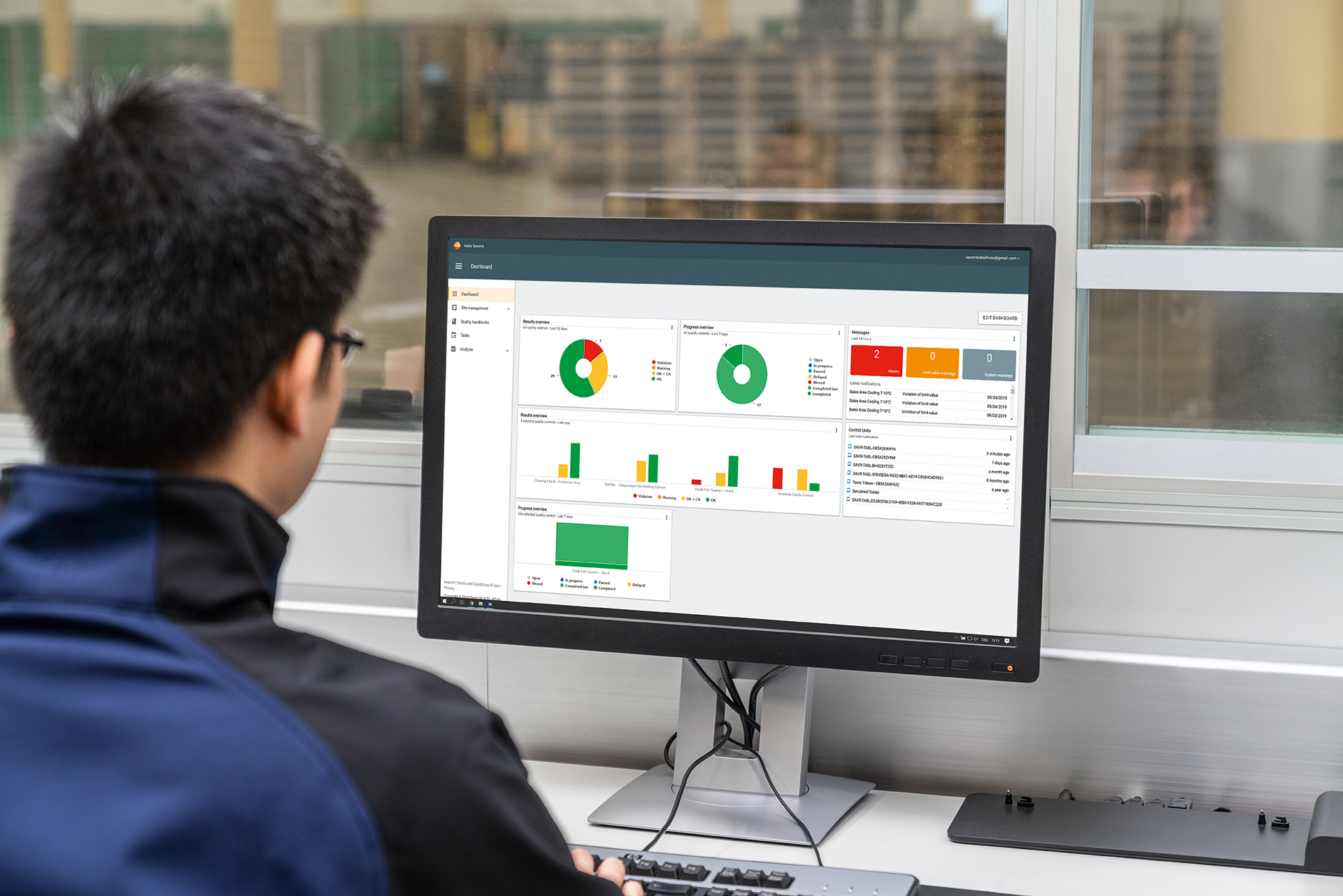
The goal is simple: spot risk earlier, fix issues sooner, and prove compliance without scrambling.
What does “digital food safety management” actually mean?
It means using software to plan, record, verify, and improve food safety programs in one system. Instead of paper checks and scattered files, teams capture data in real time and use dashboards, alerts, and trends to guide decisions.
Done well, it reduces guesswork and makes daily compliance easier to execute and easier to audit.
Why is so much food safety data “collected but not used”?
Because data often lacks structure, context, or visibility. When records live in binders, photos, email threads, and different apps, it becomes hard to compare sites, spot patterns, or even trust completeness.
Food safety management system software standardizes entries, time-stamps actions, and links each record to people, locations, products, and equipment so the data becomes usable.
Which data sources matter most for actionable insights?
The most valuable sources are the ones that predict failure and prove control. That usually includes temperature monitoring, receiving checks, cooling logs, sanitation verification, allergen controls, pest activity, customer complaints, and corrective actions.
When those streams connect, teams can see cause and effect, like whether repeated cooler deviations correlate with specific shifts, doors, or delivery schedules.
How do they turn records into insights instead of just “more logging”?
They start by defining the decisions the data should support, then design capture around those decisions. If the decision is “when to service a fridge,” then the system must track deviation frequency, duration, and recovery time, not just pass or fail.
From there, analytics summarize what changed, where it happened, and how often, so leaders can prioritize fixes that reduce risk.
What does “actionable” look like in a real operation?
Actionable insights tell someone exactly what to do next and why it matters. For example, an alert that says a unit hit 9°C is less useful than one that says the unit exceeded the limit for 42 minutes, product X was stored there, and a corrective action is required.
Good systems drive actions with assignments, deadlines, escalation paths, and documented verification.
How do alerts and workflows prevent small issues becoming incidents?
They shorten the time between deviation and response. Automated alerts notify the right role, at the right site, with the right context, so the team can move from “finding out later” to “fixing it now.”
Workflows then enforce consistency by guiding staff through corrective actions, verification steps, and sign-offs, creating a reliable loop instead of a one-off fix.
Which KPIs help them see whether food safety is improving?
They should track both control and behavior. Useful KPIs include deviation rate per device or site, average time to acknowledge and resolve alerts, completion rates for checks, repeat non-conformances, corrective action closure time, and audit readiness measures like missing records. you may visit https://www.business.qld.gov.au/running-business/planning/goals-kpi to get more about short and long-term goals and KPIs.
The best KPIs are comparable across locations and tied to risk, not vanity reporting.
How can trend analysis uncover root causes faster?
Trends show patterns humans miss when they only look at daily logs. If deviations spike on weekends, cluster around one supplier, or repeat after maintenance, the system can highlight those correlations.
This turns investigations from “What happened?” into “What keeps happening, and what changed?” which speeds up root-cause work and reduces repeat issues.
What role do mobile tools and IoT sensors play?
Mobile tools reduce friction so records are captured where the work happens. IoT sensors add continuous monitoring and remove gaps that manual checks cannot cover.
Together, they improve completeness and accuracy, and they provide a fuller story during audits or incident reviews, especially for time-sensitive controls like cooling and cold holding.
How do they keep data trustworthy and audit-ready?
They need standard forms, required fields, user permissions, and tamper-evident audit trails. Time stamps, device IDs, location tags, and photo evidence can strengthen credibility when used consistently.
Audit readiness improves when records are searchable, linked to corrective actions, and exportable by date range, site, process, and hazard control.
What are the most common mistakes when digitising food safety?
The biggest mistake is copying paper forms into an app without redesigning the workflow. That creates digital clutter, not insight.
Another common issue is collecting too many fields with no clear purpose, which increases staff fatigue and lowers data quality. The right approach starts small, focuses on high-risk processes, and expands once the system proves value.

How should they roll out a digital system without overwhelming teams?
They should pilot in one site or one process, like temperature monitoring or sanitation verification. Training should focus on “why this matters” and “what to do when something fails,” not just button clicks.
Clear ownership also matters: someone must review dashboards, chase overdue actions, and turn insights into operational changes.
How do actionable insights support continuous improvement, not just compliance?
Compliance shows they met requirements; improvement shows they reduced risk over time. Digital insights help them prioritize investments such as replacing failing equipment, adjusting delivery windows, improving SOPs, or retraining specific roles.
When the system links deviations to corrective actions and outcomes, leaders can see which fixes worked and which ones simply created more paperwork.
What should they look for in a digital food safety management platform?
They should look for flexible workflows, strong reporting, reliable integrations, and a clear audit trail. Usability matters because adoption determines data quality, and data quality determines insight quality.
They also benefit from role-based dashboards, configurable alerts, offline capability for mobile work, and simple exports for auditors, customers, and internal reviews. More to read : Top Audit Readiness Tools for Food Safety Compliance in 2026 .
What is the bottom line for turning data into action?
Digital food safety management works when data is captured with purpose and acted on consistently. When systems combine monitoring, alerts, corrective actions, and trend reporting, teams can spot risk early and fix it before it becomes an incident.
The win is not more data. The win is faster decisions, fewer repeat problems, and clearer proof that controls are working.

FAQs (Frequently Asked Questions)
What is digital food safety management and how does it improve food safety programs?
Digital food safety management uses software to plan, record, verify, and enhance food safety programs within a single system. By replacing paper checks and scattered files with real-time data capture, dashboards, alerts, and trend analysis, it reduces guesswork and simplifies daily compliance execution and auditing.
Why is much of the food safety data collected often unused or ineffective?
Food safety data often remains unused because it lacks structure, context, and visibility. When records are stored in binders, photos, emails, or multiple apps, it’s difficult to compare sites or identify patterns. Digital systems standardize data entries with time stamps and link records to relevant people, locations, products, and equipment to make the data actionable.
Which types of data sources are most valuable for gaining actionable insights in food safety?
The most valuable data sources include temperature monitoring, receiving checks, cooling logs, sanitation verification, allergen controls, pest activity reports, customer complaints, and corrective actions. Connecting these streams helps teams see cause-and-effect relationships—such as correlations between cooler deviations and specific shifts or delivery schedules—to predict failures and prove control.
How do digital systems transform raw records into actionable insights rather than just increasing logging tasks?
Effective digital systems start by defining the decisions the data should support and design data capture accordingly. For example, tracking deviation frequency, duration, and recovery time helps decide when to service equipment. Analytics then summarize changes by location and frequency so leaders can prioritize risk-reducing fixes instead of generating redundant logs.
How do alerts and workflows in digital food safety management prevent small issues from escalating into incidents?
Automated alerts notify the right personnel at the correct site with contextual information promptly after deviations occur. Workflows guide staff through consistent corrective actions, verification steps, sign-offs, assignments with deadlines, and escalation paths. This timely response loop ensures issues are fixed immediately rather than discovered too late.
What key performance indicators (KPIs) should be tracked to measure improvements in food safety?
Useful KPIs include deviation rates per device or site, average time to acknowledge and resolve alerts, completion rates for required checks, repeat non-conformances frequency, corrective action closure times, and audit readiness metrics like missing records. Effective KPIs are comparable across locations and focused on reducing risk rather than vanity metrics.